
Photojournalists urged to prioritize life-saving information in disasters at PCP forum
by Grace Anne Jintalan
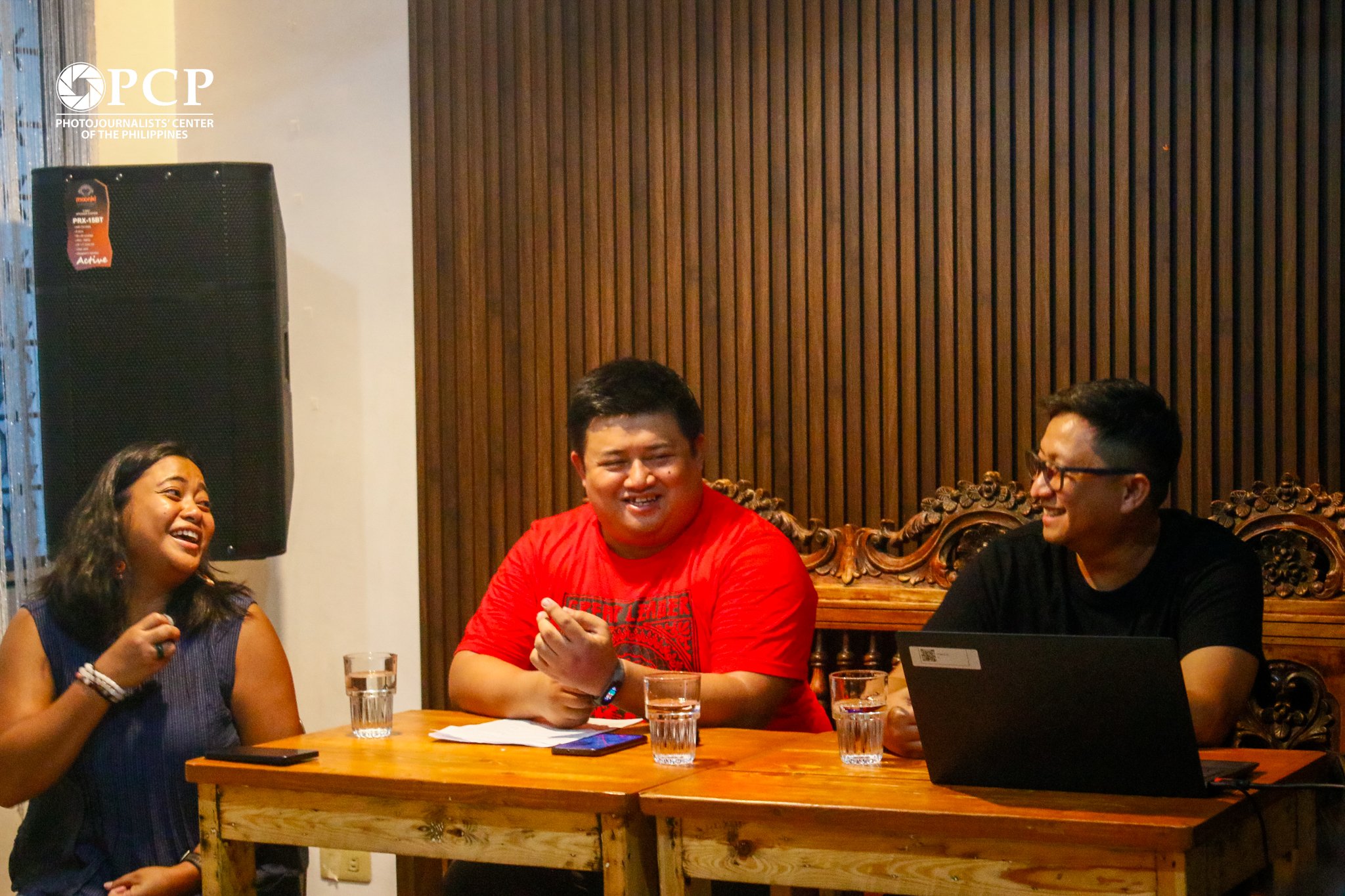
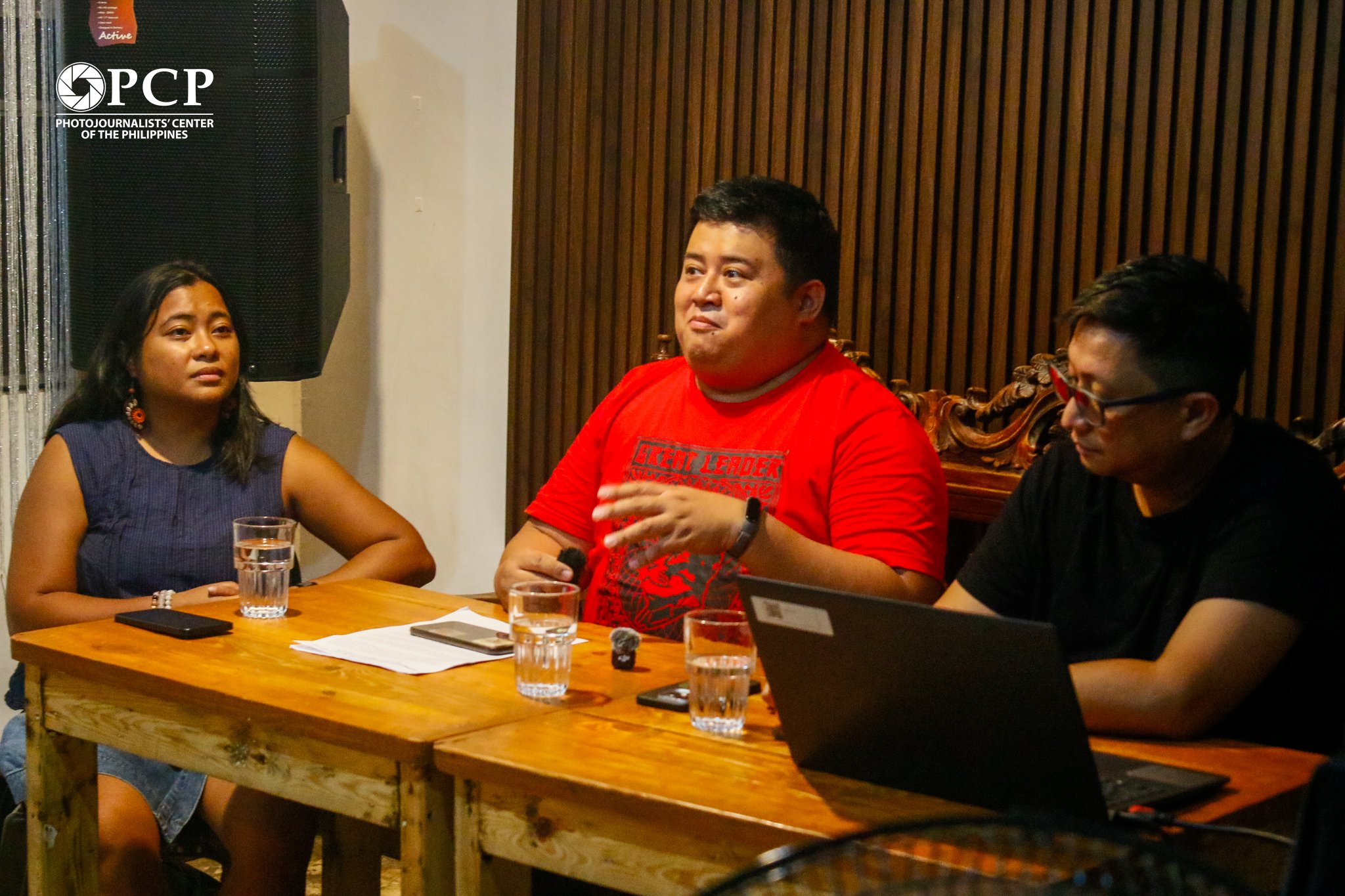
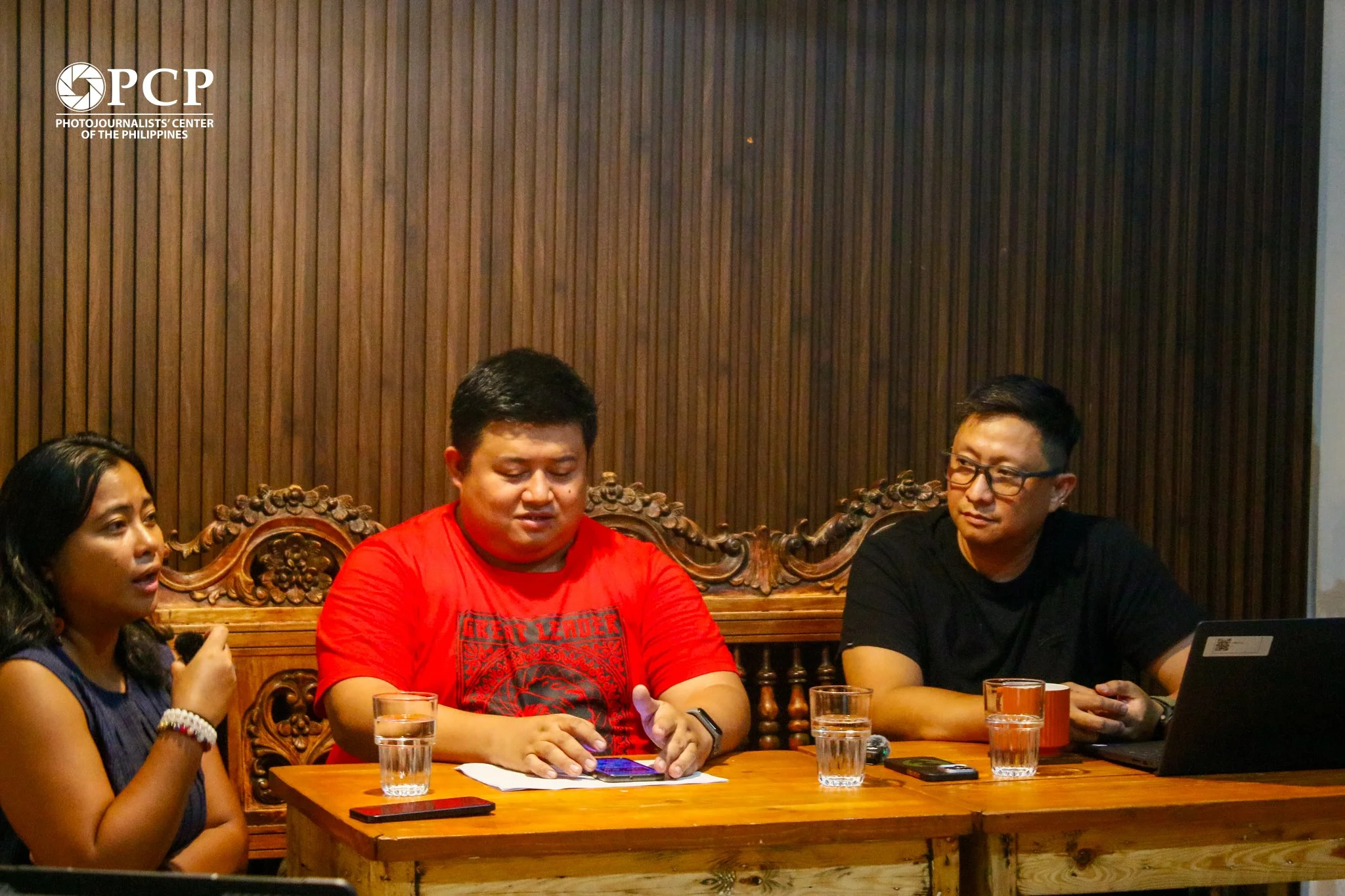
Photojournalists’ Center of the Philippines (PCP) July LitraTalk guest speakers Ramon Jose (middle) and Charlie Saceda (right) with PCP Chairperson Kathleen Limayo (left) during the LitraTalk forum on July 18, 2026.
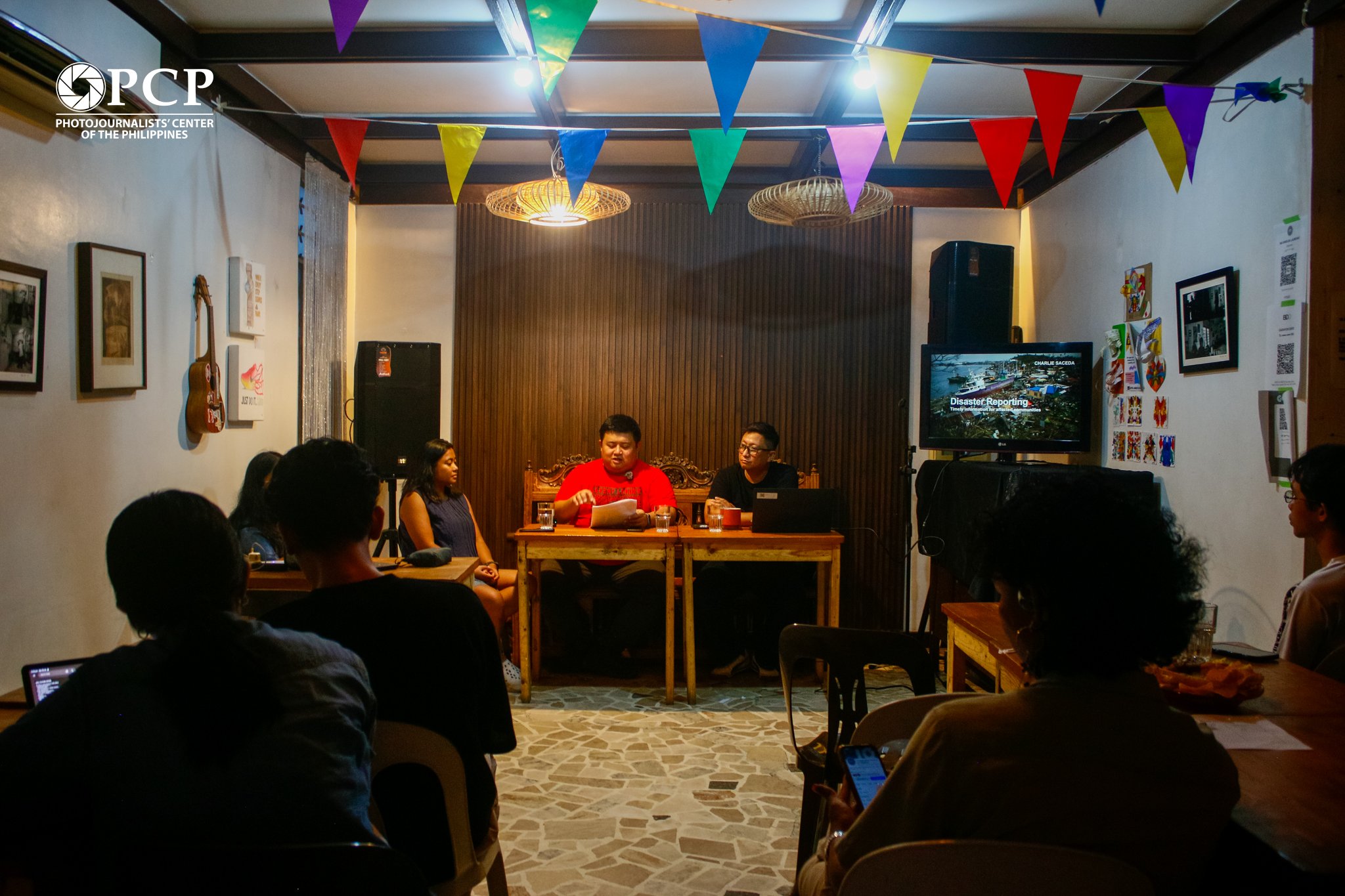
In observance of National Disaster Resilience Month this July, the Photojournalists' Center of the Philippines (PCP) hosted "LitraTalk: Usapang Photojournalists — Captured in Crisis, Photojournalism in Times of Disaster" on July 18, 2026.
PCP gathered two seasoned visual storytellers — Ramon Jose and Charlie Saceda — to discuss the critical role of photojournalists and photographers in disaster reporting, moving beyond chaos coverage to provide life-saving information and document the full cycle of disaster management.
For Saceda, a freelance photojournalist who started his career in Western Mindanao covering conflict, terrorism, and insurgencies, the journalist’s primary responsibility during a disaster is to convey the right information to the public so aid can reach those who need it most.
“Usually, yung sa nakikita natin minsan na mga reporting, parang nagma-matter pa yung mga interviews kay congressman, kay mayor, rather than going straight to those who are affected and getting from them what their needs are," Saceda observed. "As journalists, as media persons, we are the medium of information… So, we can reach those who are giving aid and those who want to help about the needs of the affected communities."
(Usually, what we see sometimes in the reporting, the interviews with the congressman, with the mayor, rather than going straight to those who are affected and getting from them what their needs are.)
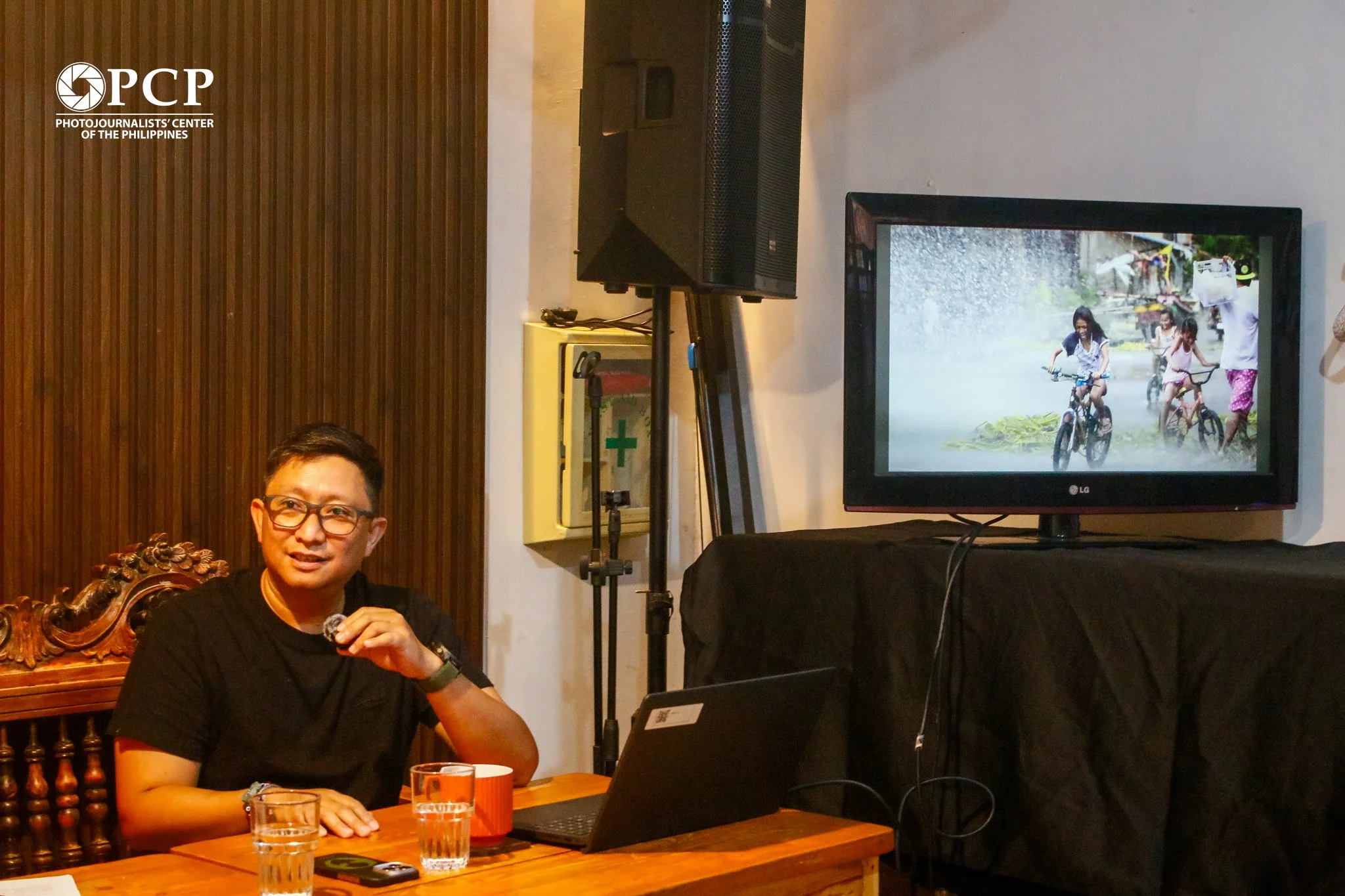
Photojournalist Charlie Saceda shares photographs of his coverage of the 2013 Typhoon Haiyan (Yolanda) in Cebu during the LitraTalk forum.
The 2013 Typhoon Haiyan (Yolanda), one of the strongest tropical cyclones ever recorded in the Philippines, illustrated the importance of information dissemination in disaster response. With sustained winds of up to 315 kilometers per hour, Haiyan devastated large swaths of the Visayas, affecting over 15 million Filipinos and 4 millions displaced. Communication lines were crippled, and affected communities were left in the dark about where to find help.
Drawing from his experience during Haiyan, Saceda recalled how photojournalists helped one another by providing logistical information to media colleagues covering the disaster.
“Like anong mga barko ang bumabyahe sa ganitong lugar, pano makarating doon, sinong iko-contact. And those information, as journalists,can also be taken from other journalists who were pre-positioned before us or yung mga local correspondents na andoon. So, getting all this information, even kung saan yung mga ospital, anong oras yung mga flights, etc.” he said.
(Like, what ships are traveling to this place? How can they get there? Who will they contact? And those information, as journalists, can also be taken from other journalists who were pre-positioned before us or the local correspondents there. So, getting all this information, even where the hospitals are, what time the flights are, etc.)
He emphasized that journalists should be on the ground before a disaster hits to relay information to the public in real time. This preparation, he said, is critical to ensuring that affected communities receive the aid they need.
Saceda explained that different phases of disaster require different information needs. In the acute emergency phase, when people are still being rescued, the priority is life-saving information.
"Huwag munang mag-interview ng sa relief operations, o kaya sinong politiko ang nagpapadala ng tsinelas. Kasi hindi siya kailangan,” he said. “Kailangan natin kung paano natin sila matutulungan para mabuhay sila.”
(Don't interview about relief operations, or who's the politician who's sending slippers, because it's not necessary. We need to know how we can help them so that they can live.)
Per Saceda, questions during this phase should focus on where rescuers are, who needs to be rescued, and what immediate help is required.
In the post-acute emergency phase, once survivors are in evacuation centers, information needs to shift to what food and water are needed.
Photojournalists can show the enormity of the hazard's impact, giving aid providers an idea of how much relief is required.
Saceda also highlighted the importance of emergency broadcast stations that serve affected communities directly, as opposed to national media whose primary audience is outside the disaster zone.
“Yung emergency broadcast station, yung information for them [the locals], how to access relief, where to get relief, or how to be safe," he explained.
(The emergency broadcast station, the information that, for them [the locals], how to access relief, where to get relief, or how to be safe.)
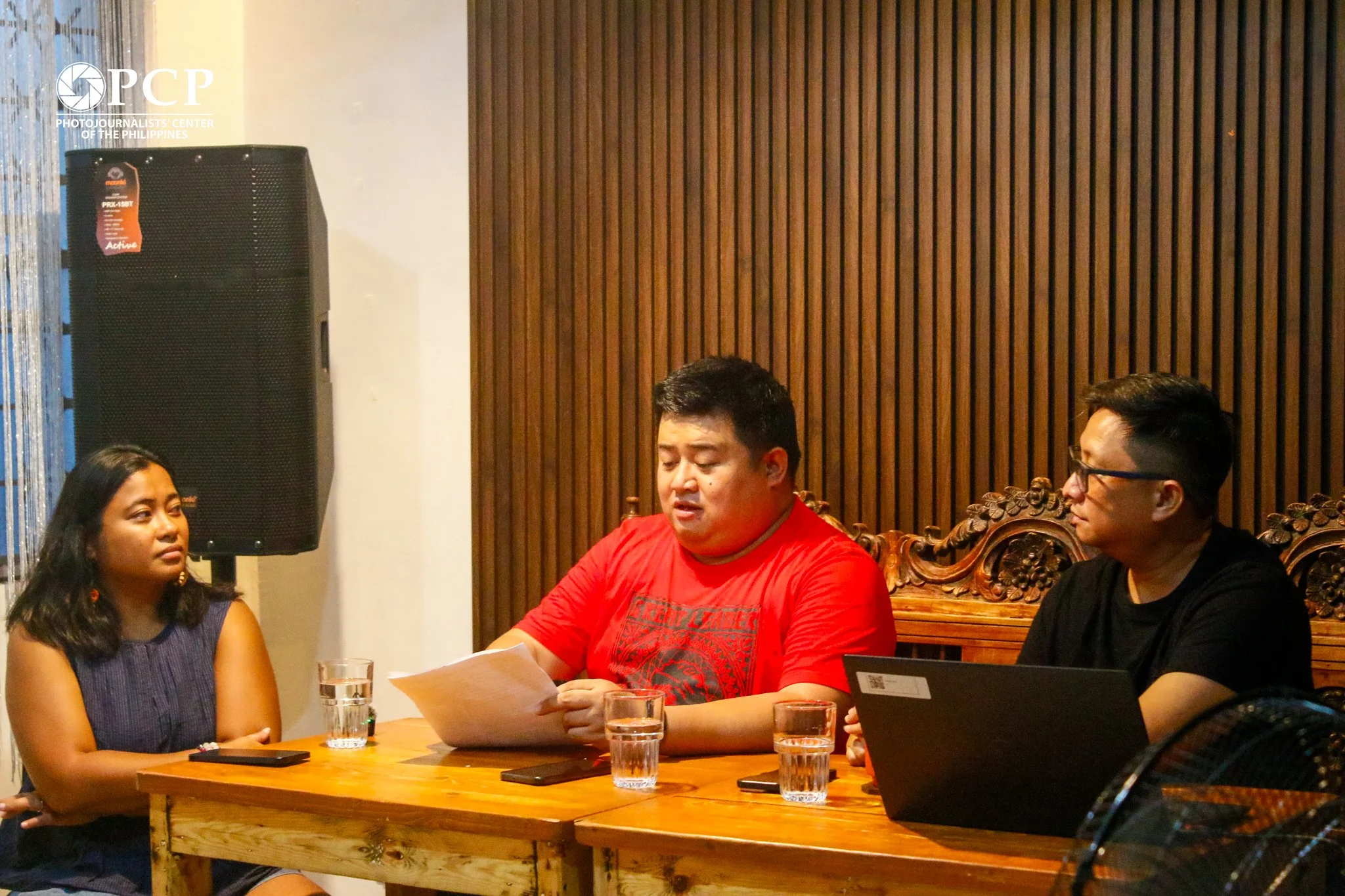
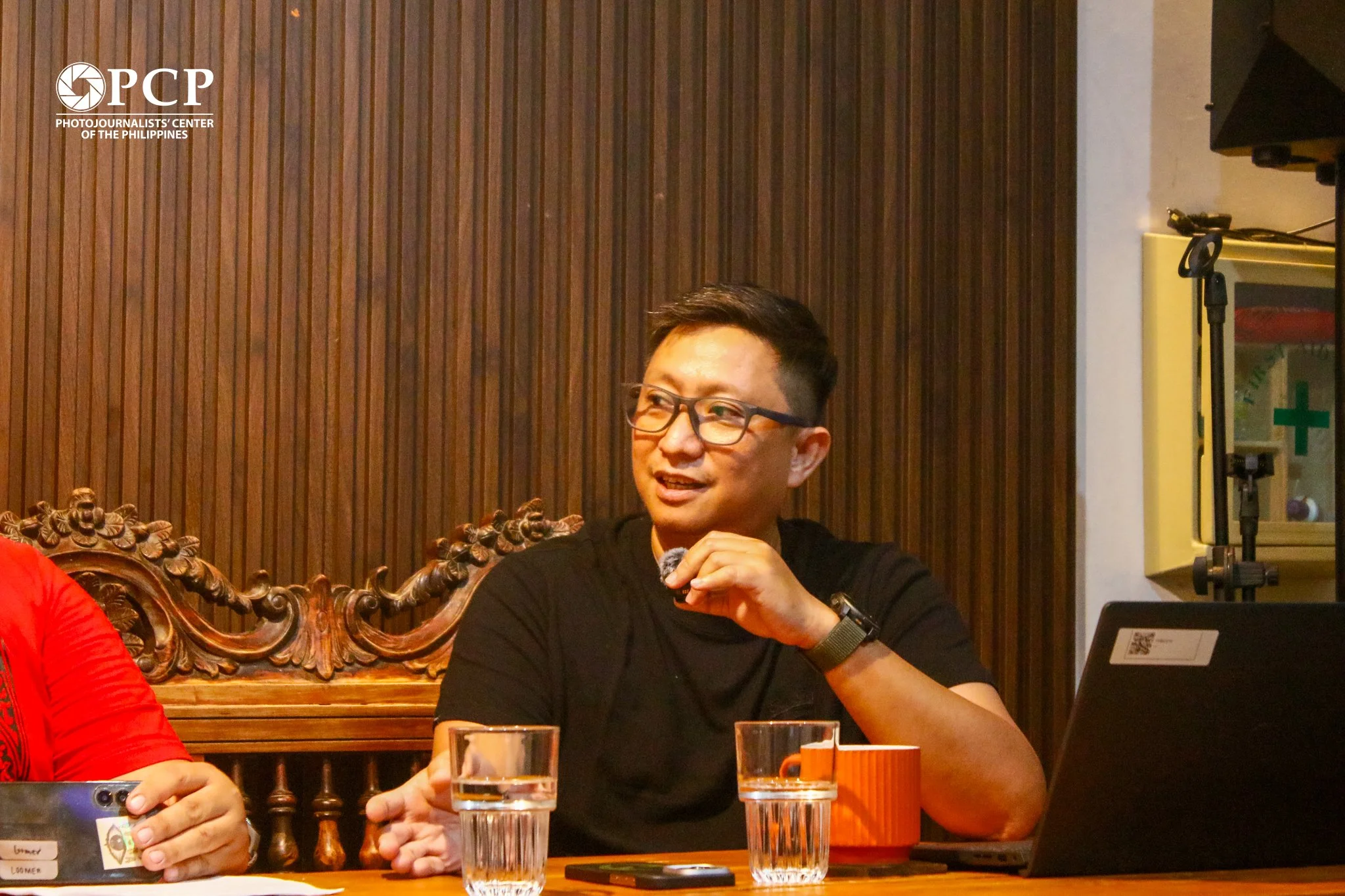
Quezon City Disaster Risk Reduction and Management Office (QCDRRMO) photographer Ramon Jose (middle) identifies government agencies journalists should coordinate with when covering disasters.
Ramon Jose, who currently serves as photographer for the Quezon City Disaster Risk Reduction and Management Office (QCDRRMO), echoed Saceda's call for journalists to be conduits of reliable information. His work at the QCDRRMO involves documenting disaster preparedness efforts and spreading awareness about disaster resilience.
Jose grounded the discussion in the Philippine legal framework, explaining that Republic Act 10121, or the Philippine Disaster Risk Reduction and Management Act of 2010, shifted the national focus from reactive relief to proactive resilience.
"RA 10121 divides Philippine disaster management into four interconnected thematic areas," Jose said.
These are prevention and mitigation, led by the Department of Science and Technology; disaster preparedness, overseen by the Department of the Interior and Local Government; disaster response, managed by the Department of Social Welfare and Development; and disaster rehabilitation and recovery, headed by the National Economic and Development Authority.
Jose then introduced the Incident Command System (ICS), a standardized on-scene management framework institutionalized under RA 10121. Under the ICS, an incident commander oversees three general command staff, one of which is the Public Information Office (PIO).
"Ang PIO ang nagiging mouthpiece ng operations," Jose emphasized. "Tapos ang PIO ang nagiging window na pwede kang sumilip doon sa whole disaster operations."
(The PIO becomes the mouthpiece of operations. And the PIO becomes the window through which you can peek into the whole disaster operations.)
When covering disasters, he stressed that photojournalists and photographers should always coordinate with the PIO. The PIO provides access to authorized operational zones, verified incident briefings, and operational maps that do not compromise tactical security.
"Mas maganda kasing magpaalam sa PIO kasi alam ng PIO kung ano yung mga areas na pwedeng puntahan at saka hindi dapat puntahan." he said.
(It's better to coordinate with the PIO because the PIO knows which areas are accessible and which are not)
Jose also noted that in some cases, there may be a separate PIO for the incident command system, distinct from the LGU's PIO. Journalists can approach either, but the ICS PIO provides the most direct window into ongoing operations.
In prevention and mitigation, photographers document long-term hazard analysis and vulnerability tracking.
“So dito sa Barangay Bagong Silangan, flood prone, liquefaction, landslides. Tapos maliban sa landslides dun sa kanya pumapasok ang West Valley Fault pagdating mo sa Quezon City,” he said that photographers can show the community's progress in building retaining walls and adopting evacuation practices even before warnings are issued.
(So in Barangay Bagong Silangan, an area prone to flooding, liquefaction, landslides. Other than landslides, there lies the West Valley Fault in Quezon City.)
While in the preparedness phase, photojournalists capture logistical and planning mechanisms such as prepositioning of boats, repacking of relief goods, and quarterly drills.
Then in the response phase, photojournalists translate active response through the structured hierarchy of the ICS. Jose encouraged journalists to look for the incident command post and the PIO, who can provide a window into what is happening on the ground.
"Kung nagko-cover po kayo ng disasters, lahat ng government offices may kanya-kanyang incident management team yan," he reminded.
(When covering disasters, all government offices have their own incident management team.)
Finally, in rehabilitation and recovery, photojournalists document how communities "build back better" after a disaster, including the demobilization process where resources no longer needed are sent home.
"Dapat, it's from start to finish na documentation," Jose said. "From mitigation, nakita mo ngayon yung preparedness. And then dumating yung sakuna, meron ka ngayong litrato ng response. Tapos hindi dapat tayo matatapos doon sa kwento ng response kasi meron pa siyang rehab and recovery."
(It should be documentation from start to finish. From mitigation, you see preparedness. Then the disaster comes, you have photos of the response. And we shouldn't end with the response story because there's still rehab and recovery.)
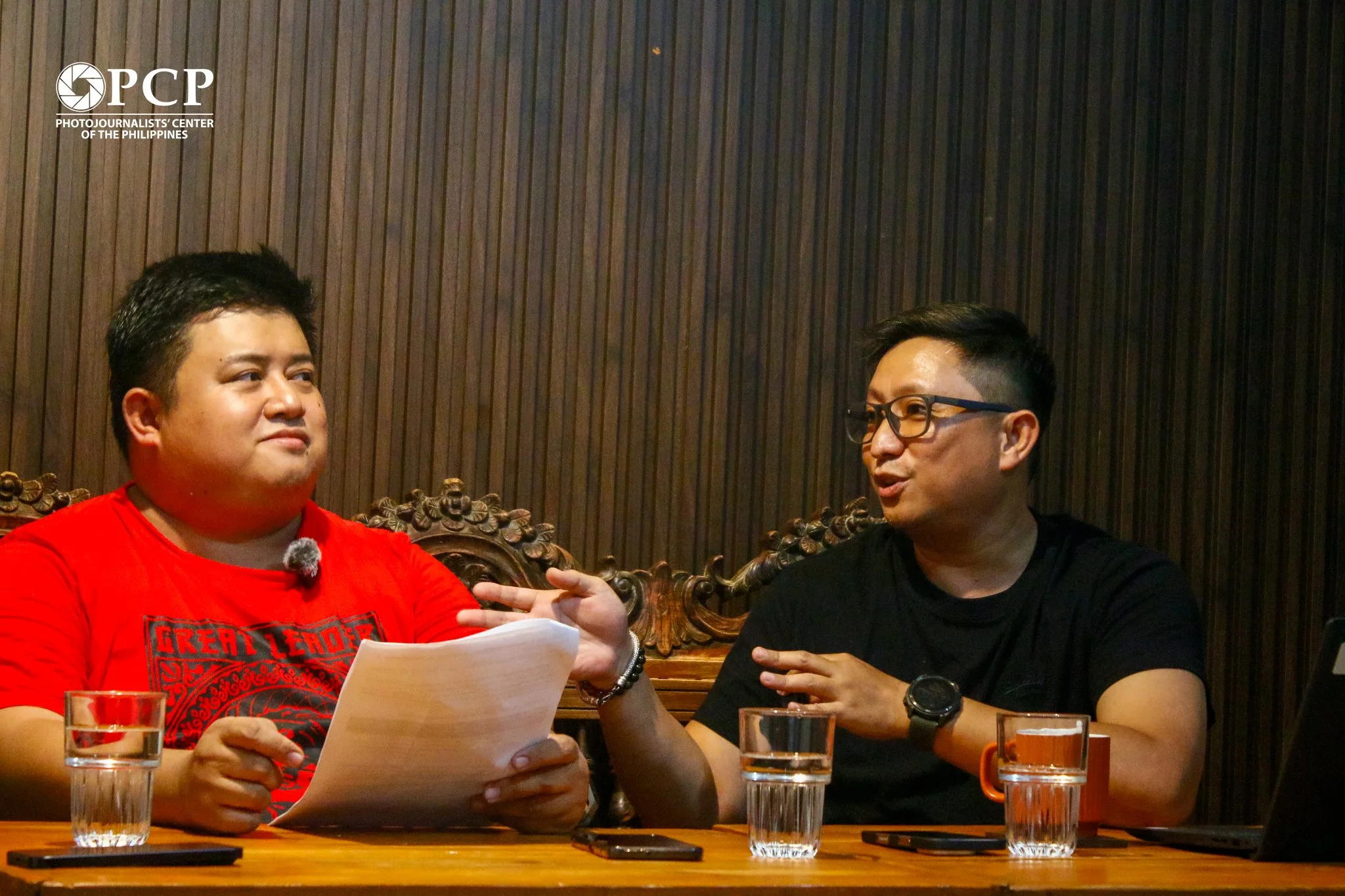
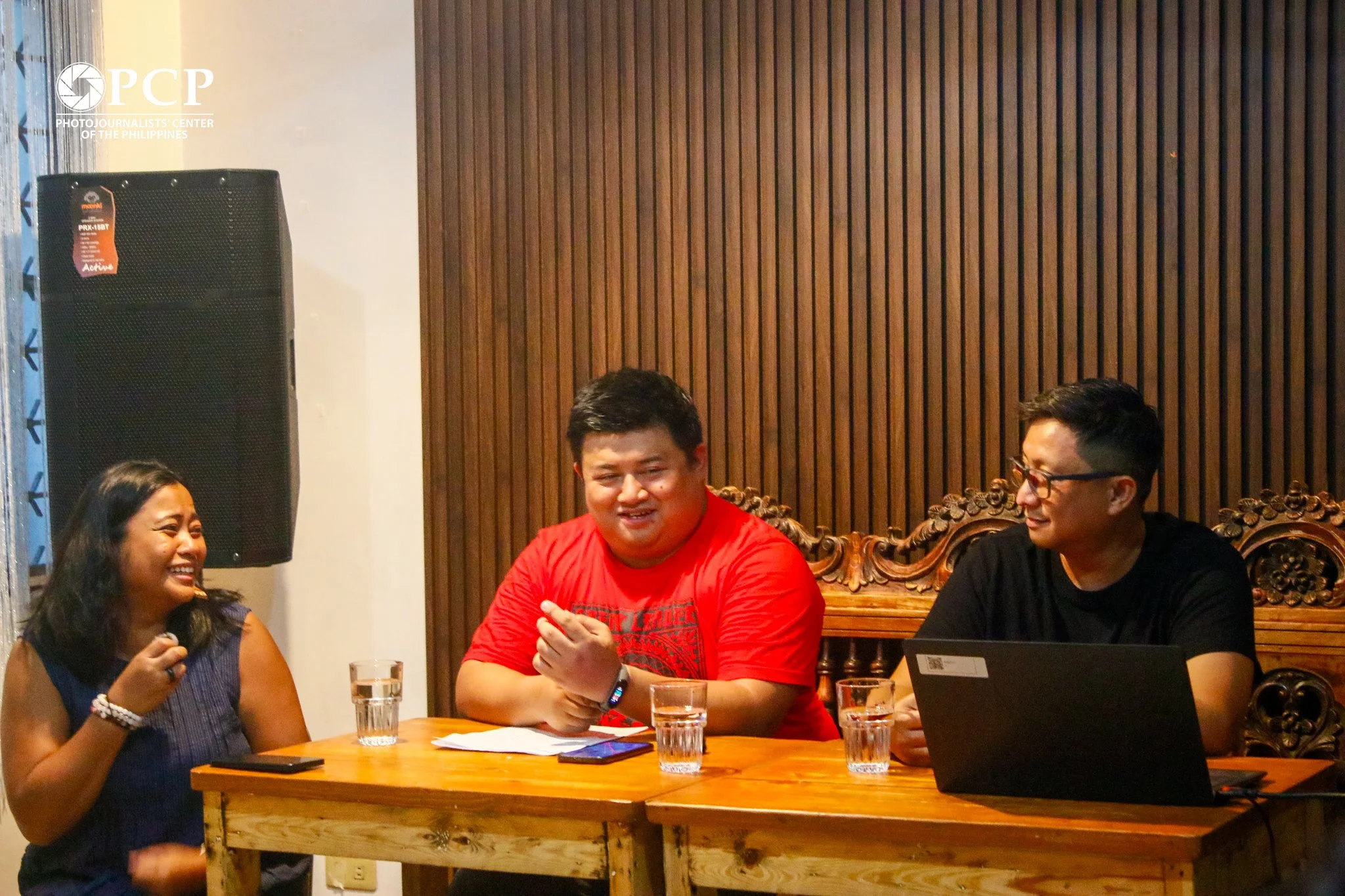
QCDRRMO photographer Ramon Jose (left) and photojournalist Charlie Saceda exchange experiences of covering disasters in the Philippines.
Both speakers emphasized the importance of preparation before covering a disaster. Saceda noted that "70% of the work is done in research." Journalists must research the nuances of the place, the culture, and the specific hazards they will face. They should also prepare a go-bag with essential gear and supplies for at least three days.
Jose added that photojournalists should understand the science behind the hazards they cover, whether it's the behavior of typhoons or the mechanics of fire hoses, to ensure their own safety.
When asked what distinguishes professional photojournalism from citizen documentation during disasters, Saceda explained that professionals think about how to tell the whole story in a single image, given that only one picture is most likely to get published to convey the full story.
“Photojournalists think of how or what elements they can put into the frame so that they can tell the whole story in one picture, in single images," he said. "By thinking about what frame, where to angle, find the angle so that the layers will be clearer, and tell that same story in the entirety of it."
Jose added that while citizen journalists can contribute valuable documentation, professional photojournalists and photographers bring critical thinking and verification skills that are essential in preventing the spread of misinformation.
In the era of fake news and AI-generated images, both speakers underscored the relevance of verification. Jose noted that in their Emergency Operations Center, they receive many photos and videos daily, but they never take them at face value.
“Hindi lang tayo tumitingin sa face value. Kailangan nating i-verify," he said.
(We don't just look at face value. We need to verify.)
Saceda added that citizens should use critical thinking to distinguish real images from fabricated ones.
“Paparating pa lang yung typhoon may mga image na nung baha. Baka pwede i-report na natin agad na false information para hindi na siya mag-spread and cause panic pa to other people,” he said.
(A typhoon is coming but there are already images of flood. Maybe we can report false information so that it won't spread and cause panic to other people.)
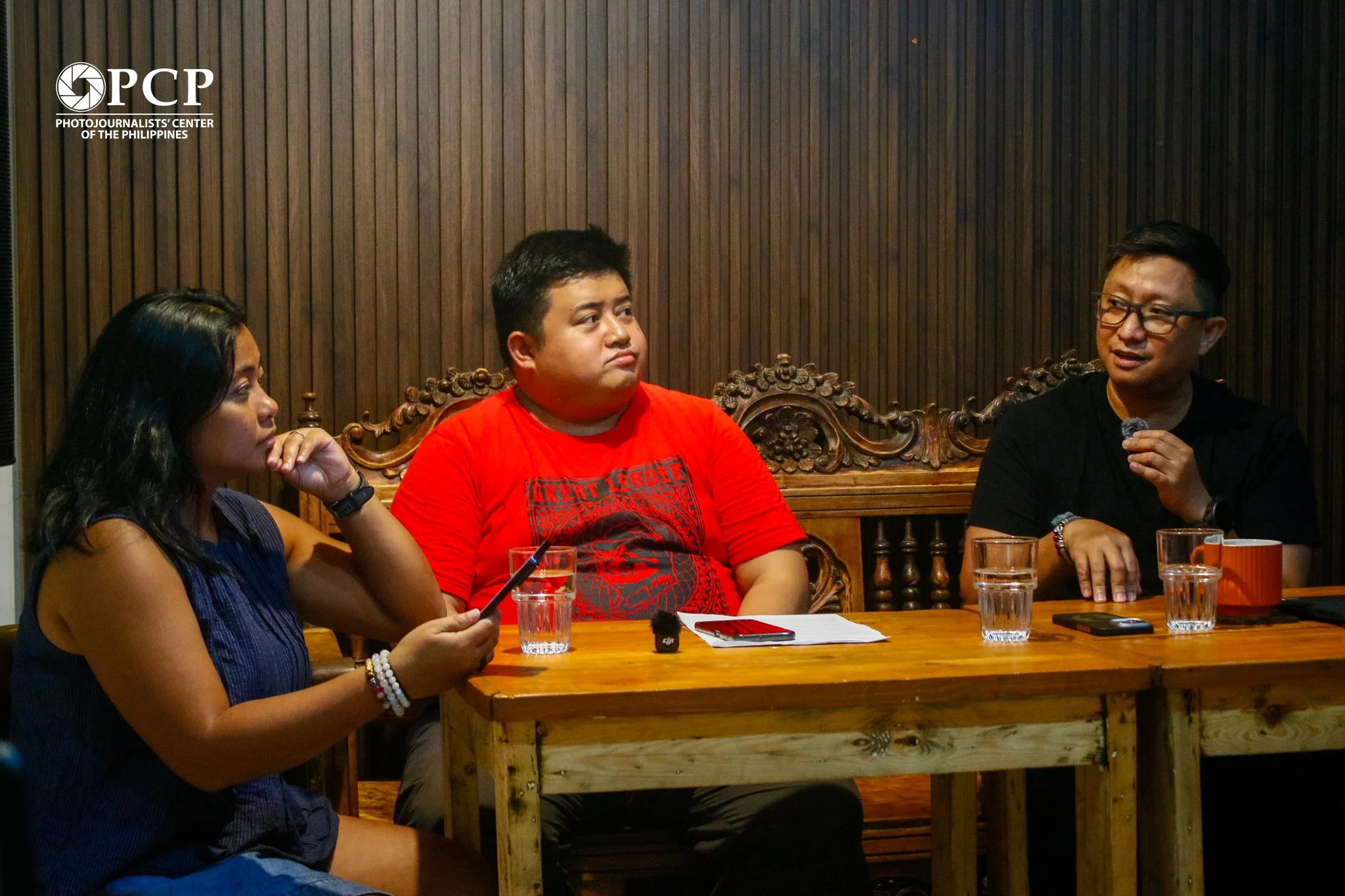
Photojournalist Charlie Saceda gives practical tips on maintaining communication with news desks during coverage for the safety of the journalists on the ground.
The forum closed with a call for photojournalists to cover disasters not just as moments of chaos, but as part of a continuous cycle of mitigation, preparedness, response, and recovery.
As Jose said it, "By fusing the macro-strategic goals of RA 10121 with the micro-tactical structure of the incident command system, photographers or photojournalists can capture the complete architecture of disaster management."
This integration creates a robust visual record that moves past contextualization and serves as a powerful educational and accountability tool for resilient public policy.
Saceda echoed this sentiment, reminding everyone that "communication is aid." The right information at the right time can save lives, sustain communities, and build resilience.
As PCP prepares for its 18th Professional Photojournalism and Documentary Workshop from November 25 to 29, the lessons from this LitraTalk serve as a timely reminder: in times of disaster, photojournalists are not just witnesses — they are essential conduits of life-saving information.
LitraTalk’s Photo Gallery
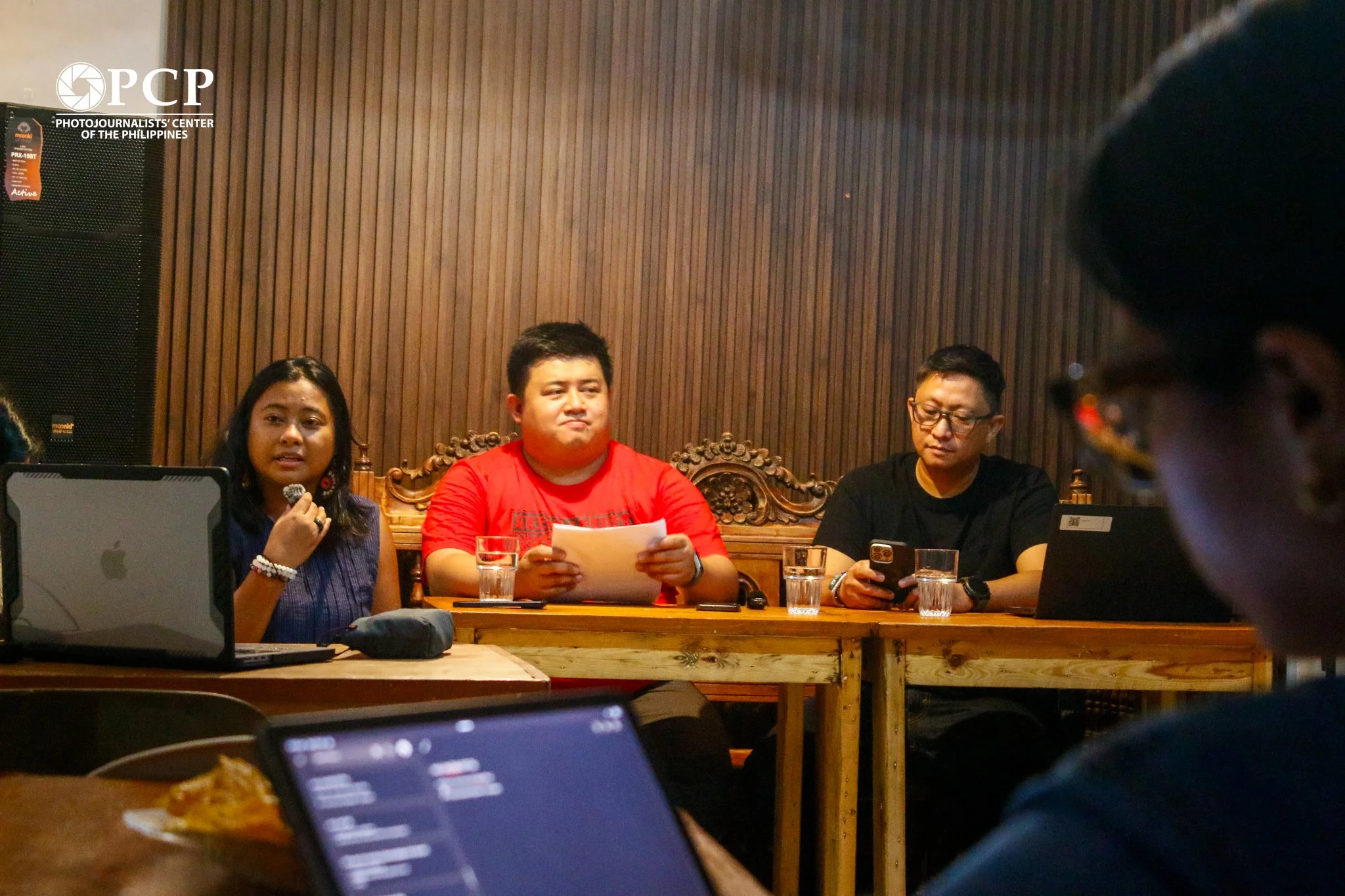
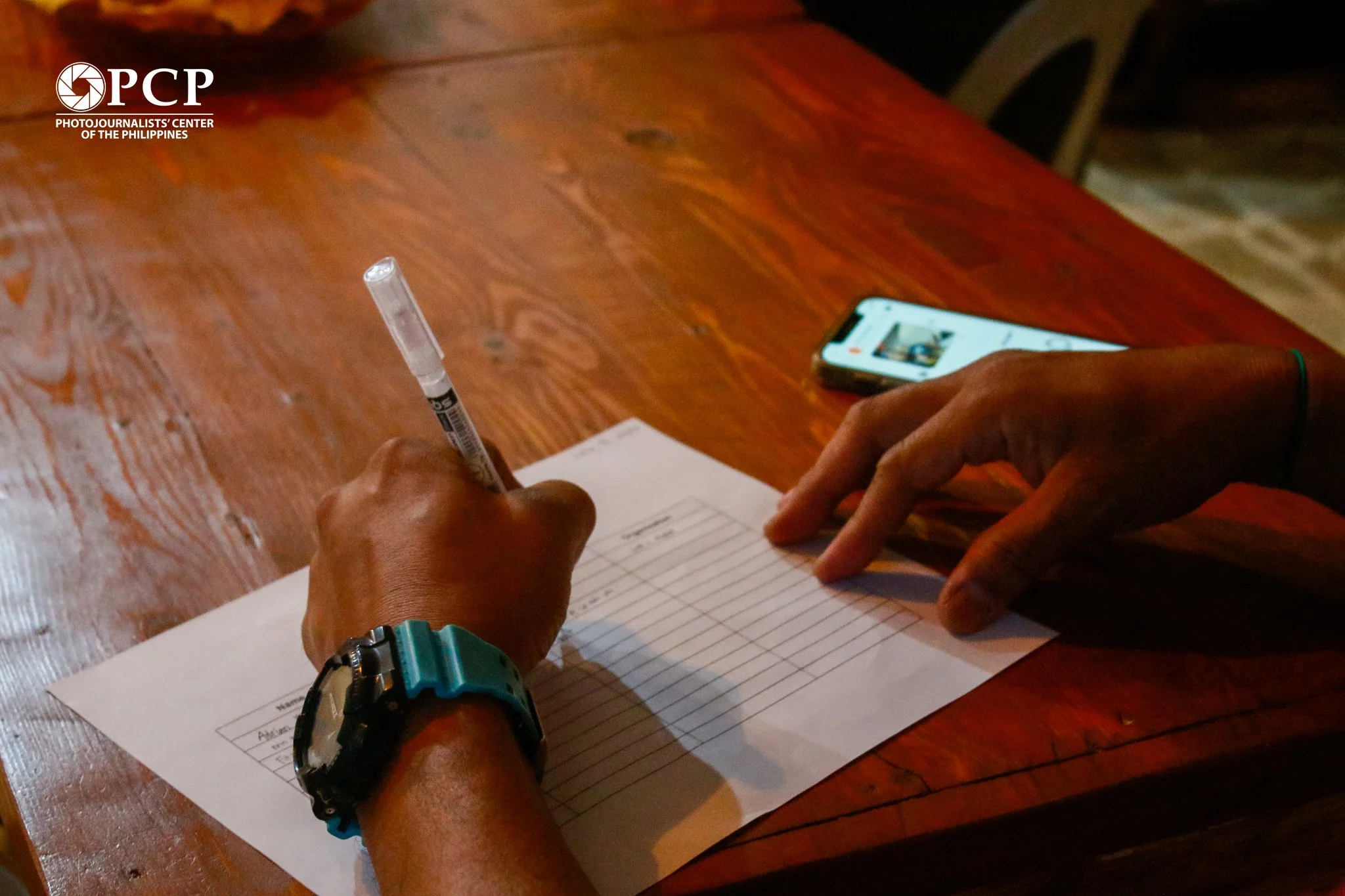
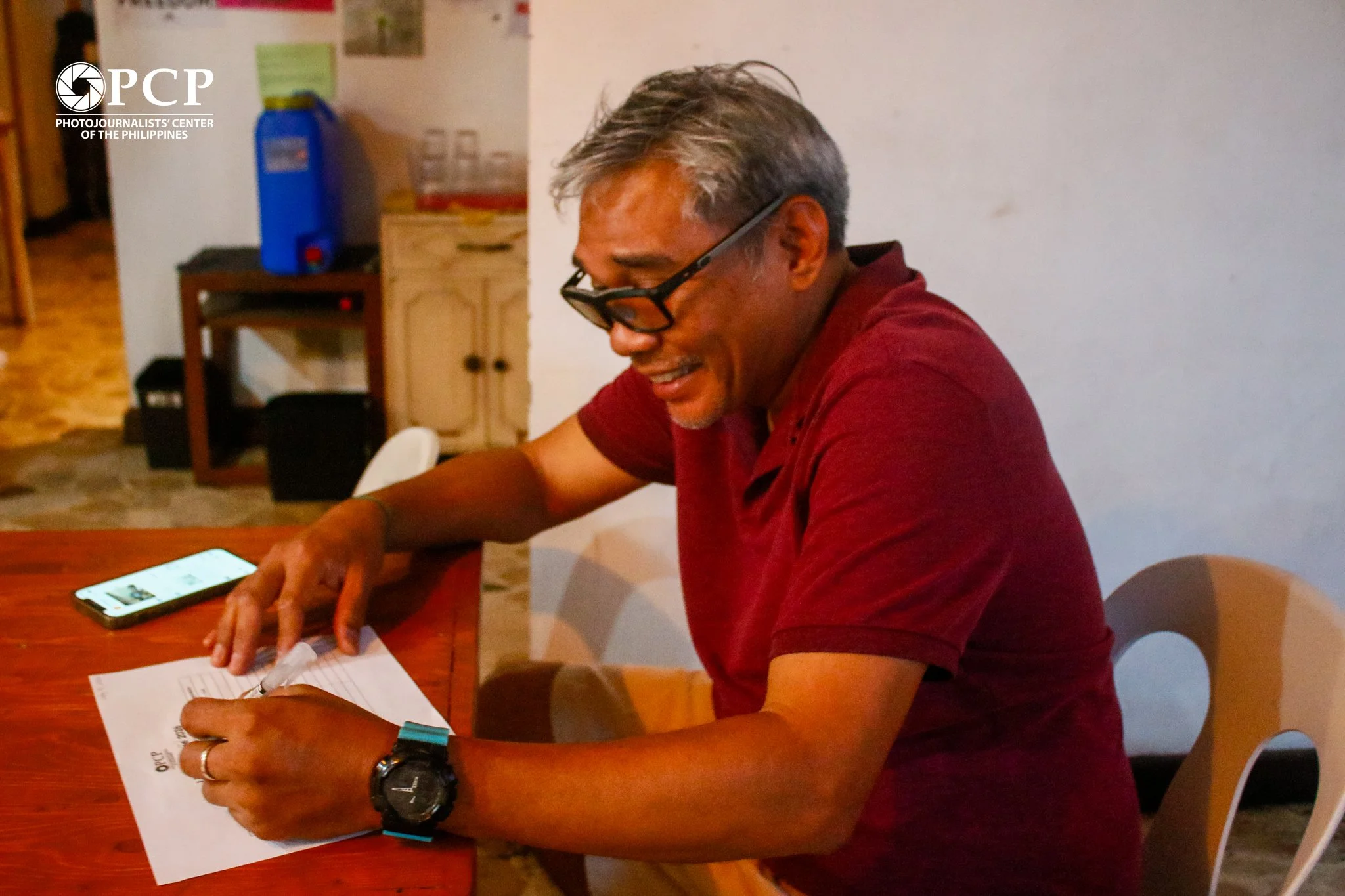
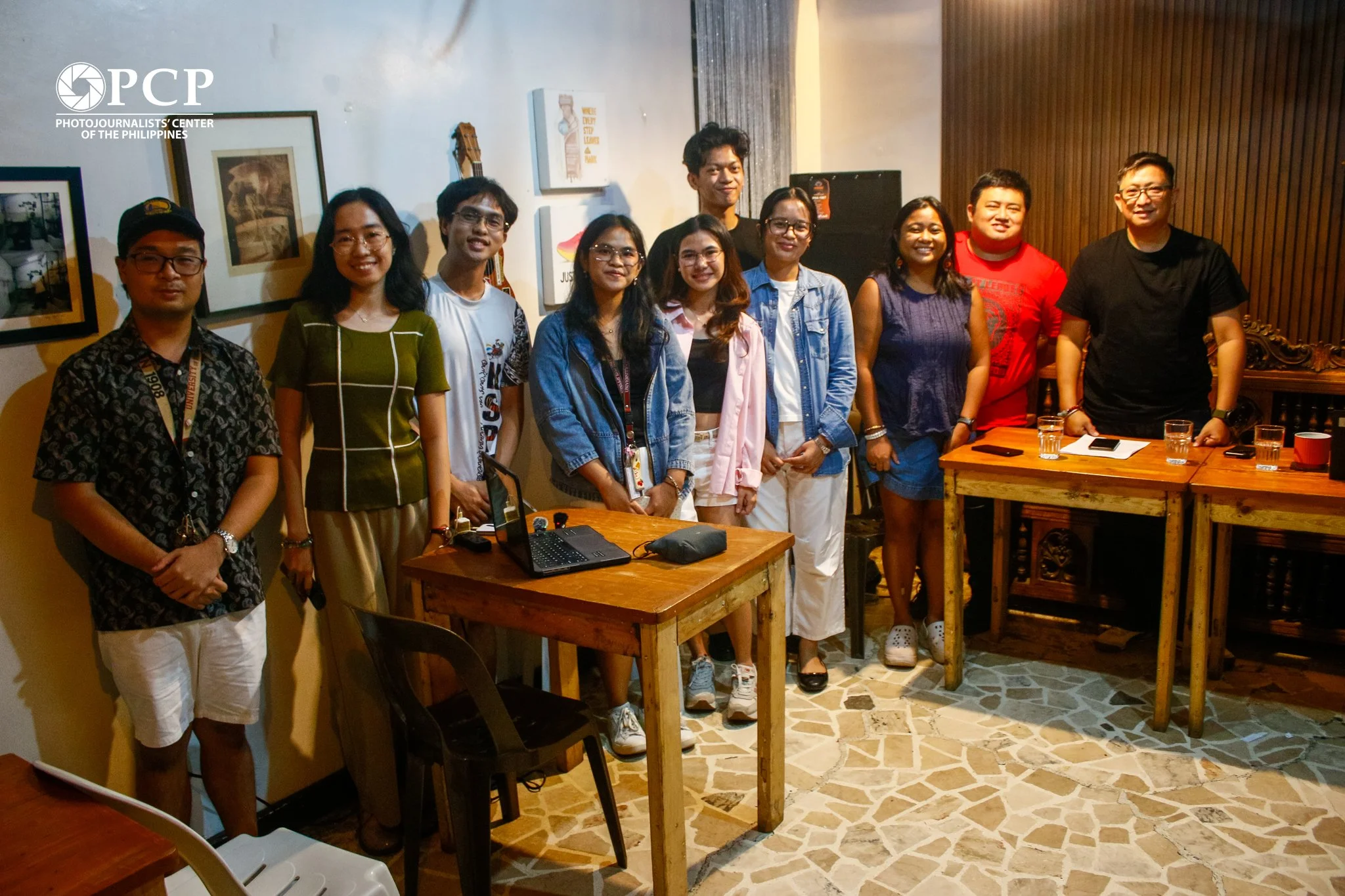
Photos by Allyana Barquira
LitraTalk is a series of regular forums hosted by the Photojournalists' Center of the Philippines (PCP) featuring different photojournalists in the field. Conducted both onsite and live-streamed online, it aims to discuss relevant topics in photojournalism and share essential industry skills with the general public.
Sources
https://www.undp.org/crisis-response/past-crises/philippines
https://www.officialgazette.gov.ph/2010/05/27/republic-act-no-10121/